logo
บ้าน

บล็อก เกี่ยวกับ New Fluorescence Tech Enhances Industrial Cooling Efficiency

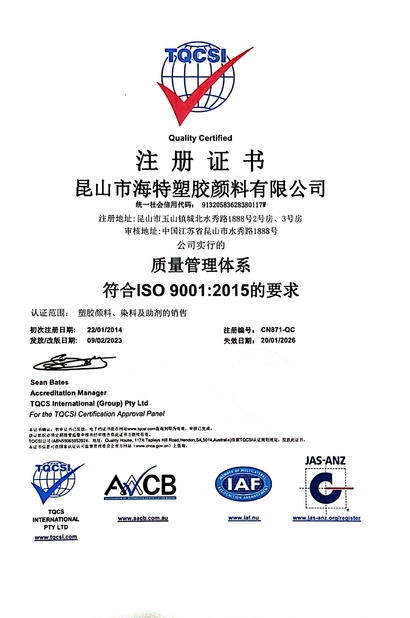
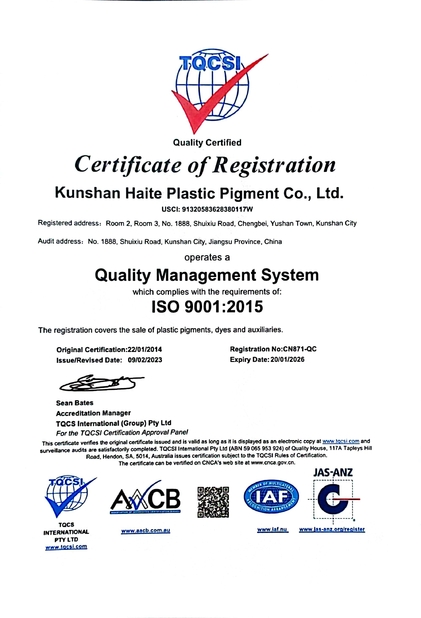
ได้รับการรับรอง
จีน Kunshan Haite Plastic Pigment Co.,Ltd รับรอง
ความคิดเห็นของลูกค้า
เราทดสอบตัวอย่างสีเหลืองและตรวจสอบความเสถียร ปรากฏว่าดีกว่ามากเกินไป เหมาะสำหรับหมึกไฮไลท์ของเรา สำหรับสีย้อมเรืองแสงนี้ เราจะพิจารณาซื้อเป็นชุด

—— โฮสเซน

เราใช้ PTSA fluorescent tracer เป็นตัวติดตามในระบบน้ำร่วมกับสารเคมีบำบัดน้ำของเราเพื่อตรวจสอบการเปลี่ยนแปลงสมดุลของน้ำ ตัวอย่างนี้ได้รับการอนุมัติโดยช่างเทคนิคของเรา

—— สวน

ฉันส่งคำถามและได้รับคำตอบเร็วที่สุด

—— โฮเซ

เราจะผลิตไฮไลท์และต้องใช้ 5 สีในการย้อมสำหรับปากกาเน้นข้อความ หลังจากการสื่อสารทางโทรศัพท์และการอนุมัติตัวอย่าง เรามีข้อกำหนดเฉพาะเกี่ยวกับ Solvent Green 7

—— โมติวาลา

เนื่องจากการล็อคเราเพิ่งเริ่มใช้วัสดุแบทช์สุดท้าย

—— kim

เรามีธุรกิจที่น่าพอใจกับ Kunshan Haite สำหรับการสั่งซื้อครั้งแรกเราทำการทดสอบตัวอย่างหลังจากรับพวกมันและผลก็คือการวัด ผลิตภัณฑ์นี้สามารถใช้เป็นตัวแทนในการบำบัดน้ำในระบบคลาวด์ออนไลน์ของเราซึ่งทำให้เรามีประสิทธิภาพมากขึ้น นี่เป็นครั้งที่สองที่เราซื้อจากพวกเขา คาดหวังว่าจะร่วมมือในระยะยาว

—— 当前触发请求缓存,目标站这个连接打不开!

เราต้องการใช้ตัวทำละลายสีเขียว 7 เพื่อใช้เครื่องพิมพ์อิงค์เจ็ทต่อเนื่องในอุตสาหกรรมสำหรับการพิมพ์วันหมดอายุและการผลิต มันสามารถละลายได้ในหมึก

—— Zain

ชุดสีน้ำเงินตัวทำละลาย 36 ที่ฉันซื้อจาก Kunshan Haite เมื่อเดือนที่แล้วมีให้สำหรับเราจริงๆ ไม่ส่งผลกระทบต่อคุณสมบัติทางเคมีดั้งเดิมของผลิตภัณฑ์ของเรา มันมีคุณสมบัติต้านทานความร้อนได้ดี ฉันคาดว่าสีย้อมตัวทำละลายสั่งซื้อสีอื่น ๆ ต่อไปสำหรับความต้องการของลูกค้ามากขึ้น

—— Tam

ฉันเป็นผู้ผลิต antifreezer ของรถยนต์ในอเมริกา ฉันต้องการสีที่ละลายในน้ำเพื่อใช้เป็นตัวติดตาม เมื่อฉันเห็นตัวทำละลายสีเขียว 7 จาก Haite ฉันติดต่อผู้ค้าส่งออกและในที่สุดเราก็บรรลุข้อตกลงประสิทธิภาพของกลุ่มตัวอย่างดีมากและมีให้สำหรับเรา

—— เคน

สนทนาออนไลน์ตอนนี้ฉัน
บริษัท บล็อก
New Fluorescence Tech Enhances Industrial Cooling Efficiency
ข่าว บริษัท ล่าสุดเกี่ยวกับ New Fluorescence Tech Enhances Industrial Cooling Efficiency

Chapter 1: The "Invisible Pain Points" and Management Challenges of Industrial Water Treatment

In modern industrial production, recirculating cooling water systems are often described as the "circulatory system" of manufacturing facilities. However, cooling water treatment has long operated as a "black box" management system. Maintenance personnel face extensive pipe networks, complex heat exchangers, and constantly changing makeup water quality.

Traditional management models typically rely on either "manual sampling + offline analysis" or "flow-proportional chemical dosing." These approaches suffer from three critical flaws:

  • Latency: Offline analysis creates delays of several hours or even days between sampling and results, leaving systems vulnerable to sudden water quality fluctuations.
  • Blind Operation: Flow-proportional dosing assumes ideal system conditions, ignoring variables like blowdown fluctuations, evaporation losses, and natural chemical degradation.
  • Cost Inefficiency: To mitigate scaling risks, operators often over-dose chemicals, leading to inflated costs and potential environmental contamination from excess treatment chemicals.

Chapter 2: PTSA – The "Digital Eye" for Cooling Water Treatment

PTSA (1,3,6,8-pyrenetetrasulfonic acid tetrasodium salt) serves as a molecular-level tracer with one defining characteristic: complete chemical inertness. It participates in no chemical reactions, resists bacterial degradation, and remains unaffected by oxidizing biocides. Functioning as a a "digital probe" within the system, it accurately reflects chemical retention levels as it circulates with the water flow.

Technical Characteristics of PTSA:

  • Exceptional Sensitivity: PTSA can be detected at parts-per-billion (ppb) concentrations, enabling comprehensive system monitoring with minimal additive quantities.
  • Unique Fluorescence Signature: Under specific wavelength excitation, PTSA emits distinctive fluorescence that remains virtually interference-free from common water impurities, ensuring data integrity.

Chapter 3: From Experience-Based to Closed-Loop Control Systems

To maximize PTSA's potential requires implementing a complete closed-loop control architecture:

  1. Smart Sensing Layer: Solid-state fluorescence sensors with self-cleaning capabilities continuously monitor fluorescence intensity in water samples.
  2. Data Analysis Layer: Controllers convert fluorescence signals into precise chemical concentration values, comparing them against predefined target concentration curves.
  3. Execution Control Layer: When concentrations fall below thresholds, controllers automatically activate chemical feed pumps, switching to maintenance mode when optimal levels are achieved. This "real-time response" approach achieves dosing accuracy exceeding 95%.

Chapter 4: Implementation Considerations and Practical Challenges

Despite PTSA's technological maturity, industrial applications require attention to several critical factors:

  • Biocide Interference Mitigation: Certain quaternary ammonium biocides exhibit fluorescence quenching effects. During their application, systems should switch to "time-lock mode," resuming fluorescence monitoring only after complete dispersion.
  • Turbidity and Color Compensation: In high-turbidity systems, suspended solids scatter excitation light. Instruments must incorporate "dual-wavelength compensation" technology to subtract background interference.
  • Storage and Preparation Protocols: PTSA requires light-protected storage. Manufacturing processes must maintain strict temperature controls to prevent hydrolysis in alkaline conditions, ensuring tracer purity.

Chapter 5: Industry Trends – The Path Toward Smart Water Management

With global carbon neutrality initiatives advancing, industrial water conservation has become a critical ESG metric. PTSA technology represents more than cost reduction—it enables "demand-based dosing" as a sustainable manufacturing practice. Future integration with IoT platforms will facilitate cloud-based data analysis, offering comprehensive lifecycle optimization for water treatment systems.

Conclusion: In an industrial environment rife with variables, PTSA introduces measurable certainty to cooling water treatment. By transforming complex chemical management into quantifiable data streams, it liberates maintenance teams from routine testing burdens, redirecting focus toward system optimization. This advancement represents not merely technological progress, but a fundamental shift in industrial water treatment philosophy.

ผับเวลา : 2026-10-08 00:00:00 >> blog list
รายละเอียดการติดต่อ
Kunshan Haite Plastic Pigment Co.,Ltd

ผู้ติดต่อ: Ms. Chai

โทร: 18001549185

แฟกซ์: 86-0512-5779-6655

ส่งคำถามของคุณกับเราโดยตรง (0 / 3000)